










































Mobilize to Vaccinate: Lessons Learned from Social Mobilization for Immunization in Low and Middle-Income Countries
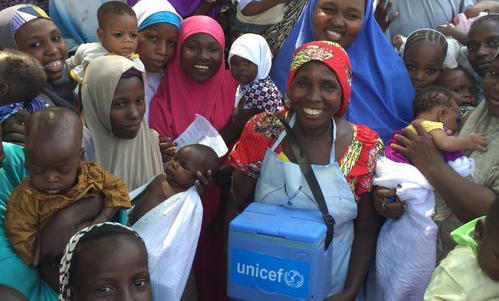
Centers for Disease Control and Prevention (CDC)
While vaccine hesitancy undoubtedly poses a threat to maintaining optimal global vaccination coverage, access constraints, social inequities, and other systems-related weaknesses also pose serious challenges to both vaccination demand and uptake in many low- and middle-income country (LMIC) contexts. Social mobilisation is a key health promotion strategy used in LMICs to create and sustain demand for immunisation services. Having defined social mobilisation for immunisation as "the collective effort by diverse stakeholders to ensure optimal vaccination uptake in a target population by generating and sustaining demand for vaccines, using community-based participatory approaches", this paper detailes four examples to illustrate lessons learned, critically examines recurring challenges faced when implementing social mobilisation for immunisation in LMICs, and offers practical recommendations.
The examples include:
- Sierra Leone's use of social mobilisation to increase routine immunisation coverage during the Universal Child Immunization (UCI) initiative in the 1980s - Religious leader engagement was a central pillar of the strategy, including the formation of faith-based action groups that comprised Islamic and Christian leaders. Imams and pastors used relevant verses from the Qur'an and Bible to promote childhood immunisation messages in mosques, churches, and other community venues. The government and the United Nations Children's Fund (UNICEF) also engaged traditional chiefs to organise community-level immunisation promotion events and vaccination outreach services. Partnerships with the media were further leveraged in promoting vaccination.
- India's establishment of a social mobilization network (SMNet) to support polio elimination in high-risk communities - SMNet trained and engaged more than 6,000 social mobilisers, of whom 90% were women. Mobilisation strategies were grounded in evidence-based communication and microplanning and comprised the use of mass media, print materials, house-to-house dialogs, peer-support groups, and the training and mobilisation of community influencers, including traditional and religious leaders. SMNet's strategies were continuously refined, using insights from various social behavioural assessments.
- The complexities of social mobilisation in a humanitarian emergency during the 2017-2018 diphtheria outbreak among displaced Rohingyas in camps and settlements in Bangladesh - Following the first campaign round of the diphtheria-containing vaccine, the U.S. Centers for Disease Control and Prevention supported UNICEF and partners to conduct a rapid behavioural assessment that uncovered various barriers to campaign participation. Results from the assessment were used to guide the revamping of social mobilisation efforts in subsequent vaccination campaigns in the camps. For instance, radio messages were revised to address vaccination concerns. Trusted leaders, including religious leaders and appointed camp leaders, were identified and engaged to promote vaccination in their community. Model Mothers were respected women elders previously trained by UNICEF to operate Community-based Information Centers in the camps, and they were trained to answer questions about vaccination concerns. Given religious and cultural norms prohibiting adolescent girls from interacting with men outside of their families, additional efforts were made to increase the number of female vaccinators.
- Introductions of the human papillomavirus (HPV) vaccine in several countries - Systematic reviews of lessons learned indicate that initiating social mobilisation early and developing ongoing interactive communication campaigns with parents and guardians that addressed emerging rumours early were more effective than non-interactive communication campaigns. Additional factors identified for successful social mobilisation were endorsement and support from national governments and having prepared crisis communication plans with clearly defined messages and roles for rapid response when needed.
Some of the underlying reasons behind the poor implementation of social mobilisation for immunisation in LMICs include failures to sufficiently integrate social behavioural science expertise into the immunisation workforce, inadequate funding, poor planning, and weak evaluation systems. These underlying reasons are further described below. Table 1 in the paper summarises major threats to social mobilisation for immunisation and mitigation strategies across 4 contexts (routine childhood immunisation, supplementary immunisation activities (SIAs), humanitarian emergencies and outbreaks, and introducing, piloting, or testing of new vaccines) and provides illustrative mitigation strategies.
Recommendations for creating resilient vaccination demand in LMICs include:
- Employ social mobilisation approaches that use data-driven messages and engagement approaches, trusted messengers, and preferred channels of receiving information and promoting action within the population.
- Engage trusted people from local communities, on an ongoing and participatory basis, in promoting vaccination using existing structures where people worship, learn, and play in their communities.
- Adapt novel mobilisation strategies that are responsive to demographic changes, such as increased urbanisation, occurring in LMICs.
- Carefully link and coordinate with service delivery to ensure that immunisation services are responsive to communities and culturally appropriate.
- Conceive and implement social mobilisation for immunisation as a centrally positioned effort with a clear, evidence-based strategy that is fully integrated within broader immunisation and health systems.
Human Vaccines & Immunotherapeutics, DOI: 10.1080/21645515.2019.1661206. Image credit: UNICEF
- Log in to post comments