










































Potential Factors Contributing to Vaccine Hesitancy among Parents in Malaysia: An Overview
Institute for Health Behavioural Research, Ministry of Health Malaysia
In Malaysia, the National Immunisation Programme (NIP) was established in the 1950s, and vaccinations against 12 major childhood diseases are provided free of charge at all government clinics across the country. Although vaccination has been recognised as a successful public health tool and even a moral obligation to provide, an increasing number of individuals in Malaysia (and elsewhere) perceive it to be unsafe and/or unnecessary. This article provides an overview of the factors that might contribute to vaccine hesitancy in Malaysia.
The article begins by exploring the Health Belief Model (HBM), which could be used to understand vaccine hesitancy. Parents' motivation behind vaccination for their children can be divided into 3 main categories: individual perceptions, modifying factors, and likelihood of action. A study that investigated vaccine hesitancy or refusal among parents using HBM showed that children had significantly lower vaccination coverage for every vaccine if their parents were less likely to agree that (a) their children's health is protected by vaccines; (b) their children might fall ill if not vaccinated; (c) vaccines do a good job of preventing the disease they are intended to prevent; (d) vaccines are safe; (e) they have a good relationship with their children's healthcare provider; or (f) medical professionals in charge of vaccinations have their children's best interest at heart. Among the prominent models developed by the World Health Organization (WHO) to explain vaccine hesitancy is the 3Cs model, which highlights 3 aspects: complacency, convenience, and confidence.
Several factors have been associated with vaccine hesitancy, and they are explored in the article in the Malyasian context. They include:
- Low awareness about the benefits of vaccination. A cross-sectional study among 73 Malyasian parents performed by Awadh et al. found that a short educational intervention significantly increased parents' knowledge of childhood immunisation.
- Availability, accessibility, and affordability. A study conducted by Ahmad et al. with the aim of identifying populations at risk for incomplete immunisation using data derived from the National Health and Morbidity Survey (NHMS) 2016 discovered higher prevalence of incomplete immunisation among children from urban areas and those children whose mothers sought care during pregnancy at private clinics. Among reasons mentioned were lack of vaccine stock at private healthcare facilities and varying immunisation schedules.
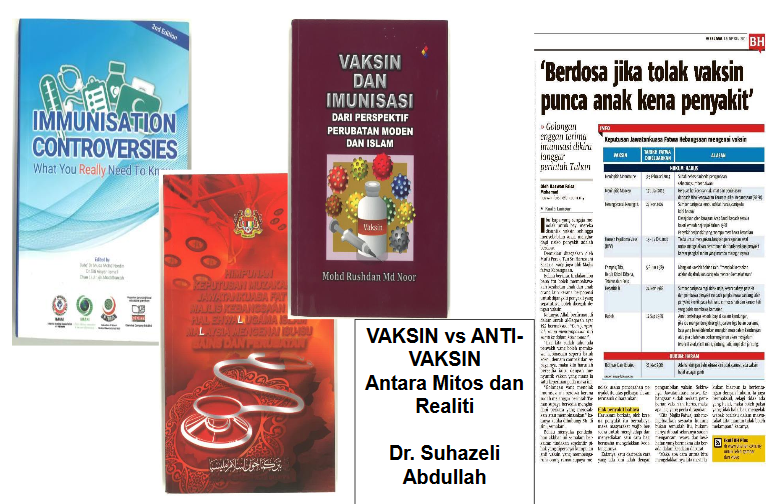
- Misconceptions and concern about side effects of vaccine. For example, a group of young, educated parents who actively campaigned via various social media, such as Facebook, claimed that the immunisation programme is a "New World" conspiracy and questioned the halal (permissible in Islamic law) status of the vaccines used. Since Muslims are the majority population in Malaysia, this issue becomes a major concern that has influenced some parents' decision against vaccination for their children.
- Preferred alternatives medicines. For example, there is a belief among some Muslims that nutrients obtained from some food such as dates, nigella sativa (black seed), honey, olive, and pomegranates, which are perceived as blessed foods and fruits in Islam, can boost and increase immunity in children.
The authors conclude that these factors might contribute to the increasing trend of Malaysian parents who choose not to vaccinate their children. Thus, more in-depth studies are warranted.
International Journal of Health Sciences and Research, vol. 8, issue 7, page 360. Image credit: Faridah Kusnin, Ministry of Health Malaysia
- Log in to post comments