










































The Anti-Vaxx Industry: How Big Tech Powers and Profits from Vaccine Misinformation
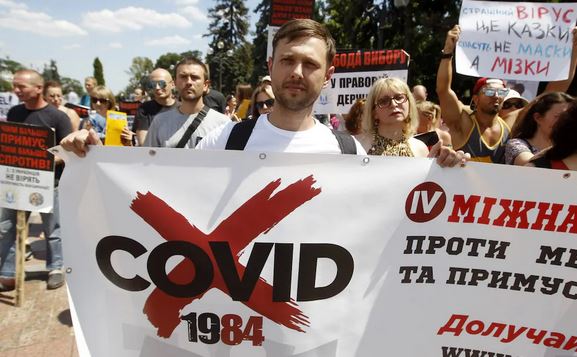
"Rampant misinformation on social media could yet be the fatal flaw that undermines a coronavirus vaccine."
From the Center for Countering Digital Hate (CCDH), this report examines the campaign against vaccines as a billion-dollar industry that benefits tech giants and others. It was published during the COVID-19 pandemic, at a time of "deep epistemic anxiety", with people feeling uncertain about what is true or false in the face of the new and unfamiliar coronavirus and the subtly shifting recommendations as scientific knowledge grows. Meanwhile, social media had already subverted public confidence in vaccines by empowering "ideologues, hucksters and the perhaps well-meaning but misinformed...to identify and communicate with potential converts at zero cost."
The issue that concerns CCDH, as argued in this report, is that: "The decision to continue hosting known misinformation content and actors left online anti-vaxxers ready to pounce on the opportunity presented by Coronavirus....This sophisticated ecosystem has grown by exploiting weaknesses in each social media company's policies on anti-vaxx and health misinformation."
In light of research finding that a heterogeneous ecosystem and varied approaches to messaging allow anti-vaxxers to more easily form connections with other online communities than pro-vaxx groups, the report separates the anti-vaxx movement into 4 sub-communities and studies them in depth:
- Campaigners are full-time activists working to popularise anti-vaxx ideas. This includes professional anti-vaxxers who earn a living from their activism, grassroots activists who use Facebook pages to share anti-vaxx misinformation, and non-profit organisations that push anti-vaxx narratives.
- Entrepreneurs use their involvement in the anti-vaxx movement to promote a business, typically leading users from freely accessible anti-vaxx content to paid-for products and services (e.g., books and alternative medical treatments).
- Conspiracists approach the issue of vaccines from an interest in conspiracy theories more generally. Unlike campaigners, they do not focus on the issue of vaccines or health full-time, but like entrepreneurs they sometimes use their involvement in the issue to promote a business.
- Communities are people with an interest in anti-vaxx ideas who have formed groups in which to share and discuss those ideas. Communities are almost always Facebook groups or smaller Facebook pages, some of which are private. A minority of communities are run by entrepreneurs.
CCDH's investigation of 409 English-language anti-vaxx social media accounts shows they now have 58 million followers. For 147 of the largest accounts, with 49 million followers, they have gained at least 7.8 million followers since 2019, an increase of 19%. Analysis of transparency data for the 215 Facebook pages in the sample shows that 90% have administrators based in the United States (US), while 20% have at least one administrator based in Canada, Australia, New Zealand, or the United Kingdom (UK).
Polling commissioned from YouGov for the report shows that only 69% of the UK citizens polled plan to get a COVID-19 vaccine, which is far below the 82% population immunity that scientists say we need in order to safely manage a disease as contagious as COVID-19. This polling also shows that social media use and vaccine refusal are linked. Amongst those who use social media more than traditional media to access news and updates about COVID-19, 63% in the UK say they will get a vaccine, compared to 72% for those who rely more on traditional media.
CCDH argues that this "anti-vaxx infodemic" is a result of decisions made by big tech. After a series of measles outbreaks in the West in 2019, Facebook, Instagram, YouTube, and Twitter all decided against the removal of anti-vaxx content and accounts - instead hiding or labelling anti-vaxx content. The reason, according to CCDH, is that social platforms "chose not to alienate an anti-vaxx user base" that is estimated to be worth up to US$1 billion a year to them. (This income is primarily generated by advertisers seeking to reach users with an interest in anti-vaxx misinformation, but also includes what the anti-vaxx movement spends on ads to reach a wider audience.) "Some platforms have even broken their own promises by profiting directly from anti-vaxx content." As a result, the anti-vaxx industry has reached 41 million followers from the start of the COVID-19 pandemic. Just 3 anti-vaxx accounts in the sample of 409 had been removed by Facebook since March 2020.
CCDH's investigation found that the movement is strongest on Facebook. Anti-vaxx Facebook groups and pages they studied command over 31 million followers, well over half of the combined following of all the accounts they studied. Anti-vaxx accounts have nearly 17 million subscribers on YouTube and 7 million on Instagram, but appear to be weakest on Twitter, where they have 2 million followers. CCDH theorises that this could be due to people's reluctance to publicly admit anti-vaccination views: 89% of the Facebook pages in the sample have more followers than likes, with the key difference that likes are visible to other users. In contrast, just 44% of the top 50 Facebook pages (of any type) have more followers than likes.
That said, Instagram is catching up to Facebook, accounting for more than half of anti-vaxx campaigners' follower growth during the COVID-19 pandemic. As the report details, Robert F. Kennedy, Jr. led this trend by leveraging his reputation as an environmental activist in conjunction with graphic memes that promote conspiracy theories about Bill Gates and 5G mobile phone signals, adding over 336,000 people to his following in a span of just months. Anti-vaxx filmmaker Del Bigtree and Nation of Islam influencer Rizza Islam have also used Instagram as a communication medium, adding another 187,000 followers between them. This rapid growth contrasts with more sluggish growth on Facebook, where new policies on anti-vaccine misinformation appear to have had a limiting effect on many groups and pages, "suggesting that Facebook would be wise to ensure that similar techniques are being applied to its management of Instagram, which it wholly owns."
In conclusion, CCDH argues that social media companies should:
- Enforce their own policies on COVID-19-related and health misinformation.
- Contribute to the global effort to contain Coronavirus by "paying back the billions in profits they have made from the anti-vaxx movement....; if they don't, this report gives legislators the moral and factual arguments to create a levy to do so."
Other businesses can play a role, too, by listening to campaigns like CCDH's Stop Funding Fake News and Stop Hate for Profit and making sure that big tech pays an economic cost for spreading misinformation. One route for advocacy could be supporting the Online Harms Bill the UK Government has been drafting; per CCDH, it should include a statutory duty of care for social media companies so they take a proactive stance to public protection on their publishing platforms, backed up by the possibility of fines, boycotts, and even criminal charges.
In conclusion: "This report...makes it clear that platforms have acted negligently. They have failed in their duty of care..."
"One group that's really benefitted from Covid-19: Anti-vaxxers", NiemanLab website, by Laura Hazard Owen, July 10 2020; "It's time the tech giants cracked down on the anti-vaxx infodemic", The Telegraph, by Imran Ahmed, July 7 2020; and "The public back sanctions on tech giants that spread anti-vaxx misinformation", CCDH website, July 14 2020 - all accessed on July 21 2020. Image credit: Stepan Franko/Shutterstock
- Log in to post comments