










































Health System Barriers and Levers in Implementation of the Expanded Program on Immunization (EPI) in Pakistan: An Evidence Informed Situation Analysis
Health Services Academy (Shaikh, Hafeez); Johns Hopkins Center for Communication Programs (ul Haq); Alliance for Health Systems and Policy Research (Tran)
"Demand side issues and community misperceptions are quite high."
Pakistan's immunisation indicators have improved since the Expanded Program on Immunization (EPI)'s inception in 1978; however, data from 2012 to 2013 recorded merely 54% full immunisation coverage for children age 12-23 months. This review aims to bridge the information gaps on system-level barriers that currently impede the optimal delivery and uptake of immunisation services to the children of Pakistan through the EPI. It explores various pillars of the EPI from both the service delivery and the demand side perspective. The researchers conducted a literature review, identified barriers and levers of EPI implementation, and then developed a set of recommendations.
In addition to discussing programme financing, the study looks at programme governance. In late 2014, due to a rise in polio cases, an Emergency Operations Centre (EOC) was established and was mandated to ensure a synergy between the Polio Eradication Initiative (PEI) and EPI, as well as with other sectors. Nevertheless, this convergence or synergy is still to be seen as fully operational. The role of the private sector as a key stakeholder has also been documented with regard to governance of EPI, which could work hand in hand with the public sector in order to achieve desired immunisation targets, but its potential remains untapped.
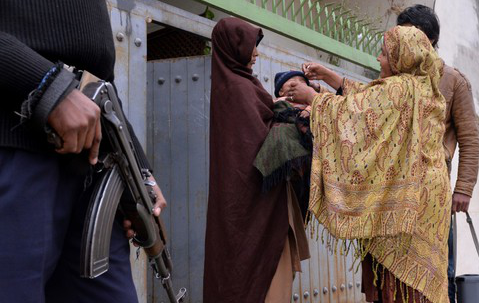
Competency of the staff, outreach capacity, service structure, attitudes towards clients, political interference in transfers and postings, and lack of accountability are all notable human resource (HR)-related issues of EPI. On the other hand, there are workers in the polio programme who are willing to perform their duties while putting their lives at risk and facing extremist sections of the society. Introducing incentive structures among managers and health workers of EPI or contracting with non-governmental organisations (NGOs) could potentially improve the HR performance. As reported here, coverage of vaccination services requires a rational re-deployment of vaccinators and task shifting to community-based service providers, e.g., lady health workers (LHWs) and community midwives for covering their catchment areas. Involvement of the private sector and NGO outlets is also one of the solutions, but at present, there is no policy in EPI on formal engagement with the private sector.
Unreliable reporting, poor monitoring and supervision systems, and limited use of local data for decision-making are other impediments in the performance of EPI. Data collection is paper-based at the facility level, and then, from district upwards, it becomes electronic. Therefore, establishing its credibility has been a challenge. Moreover, for quite some time, the EPI data was not reflected in the District Health Information System (DHIS). Employing newer technologies (e.g., GPS, tablets, smartphones, etc.) could potentially improve the timeliness and accuracy of the data.
Low community awareness and misbeliefs that vaccines cause disease and doubts about vaccine safety and effectiveness have been reported to be factors impeding the uptake of immunisation, especially in the case of polio. The gender differential in immunisation coverage calls for gender mainstreaming strategies at the community level, such as employing more female vaccinators and community volunteers for outreach to women. Community activists can also encourage people to seek immunisation services and can increase demand by educating various community segments, especially those with low literacy. Communication between immunisation workers and parents - positive engagement - has found to have helped to overcome resistance to vaccinations. On the other hand, research has shown that service providers in clinics do not emphasise the importance of immunisation. Religious beliefs and lack of knowledge about the benefits of the vaccines still affct the decision-making of many pockets of this country. Targeted community awareness programmes, a robust surveillance network, and engagement with dominant religious entities could help - such as by negotiating access in the areas where refusal is an issue.
One study cited here indicates that ample funds are allocated for social mobilisation, yet meager amounts are spent on communication and on efforts to raise community awareness of routine immunisation. A shift of resources from mass media (TV and radio) to community-level, dialogic communication is proposed, given clear evidence that caregivers rely on healthcare providers, family, and friends for information about immunisation.
The report concludes with several recommendations, such as those related to engaging communities. Here, it is suggested that campaigns for demand creation need careful planning and coordination with communication experts. Increased funds for mass campaigns and to the districts to customise messages in local contexts is needed. Developing a deeper understanding of locally held perceptions or misperceptions that shape the behaviours of the community is described as a helpful strategy in certain geographical areas that have historically proved resistant to EPI efforts. Face-to-face communication and advocacy with local opinion leaders and community elders should be continued.
In conclusion, evidence suggests that focusing on governance of the programme, improving facility-based service delivery, and addressing community perceptions could result in the biggest payoffs for the EPI in Pakistan. The researchers contend that, within this multi-cultural milieu, with its complex health system, the country presents a case for embarking upon more systematic health systems and implementation research to develop an empirical evidence base and to rebuild the routine immunisation programme to reach the people who are most in need.
Public Health Reviews 2018; 39: 24. doi: 10.1186/s40985-018-0103-x. Image credit: PBS
- Log in to post comments