










































Understanding the Accountability Issues of the Immunization Workforce for the Expanded Program on Immunization (EPI) in Balochistan: An Exploratory Study
University of Nebraska Medical Center (Naveed, Alnaji, Kumar); Provincial Directorate of Health, Quetta (Saeed, Kakar); World Health Organization, or WHO (Khalid)
"...trust building between community and the vaccination program and social mobilization about the benefits of vaccinations through community influential[s] is vital."
Of all the provinces of Pakistan, immunisation coverage is lowest in Balochistan. Demotivation leading to poor performance and absenteeism can cause or exacerbate an inefficient immunisation programme. The objective of this study was to better understand the accountability issues of Expanded Programme on Immunization (EPI) workforce at provincial and district levels and to identify strategies for building a stronger health workforce, which is a vital component of the World Health Organization (WHO)'s health system framework.
The exploratory qualitative study was guided by a conceptual framework that includes three dimensions of accountability:
- Answerability, which entails informing, elucidating, and justifying decisions and actions to those affected by these decisions and to those who established the rules;
- Enforcement, which regulates the capability to reward good performance or execute sanctions to reprimand bad performance against set standards in an agreement between parties; and
- Responsibility, which requires that all actors have clearly defined duties, objectives, and performance standards.
The elements affecting each of the three dimensions were assigned based on three types of actors: stakeholders, providers, and patients/citizens. Five districts of Balochistan were selected based on the comparative poor and good routine immunisation coverage and the Human Development Index (HDI) of each. Interviews were conducted with 53 people, including vaccinators and EPI staff.
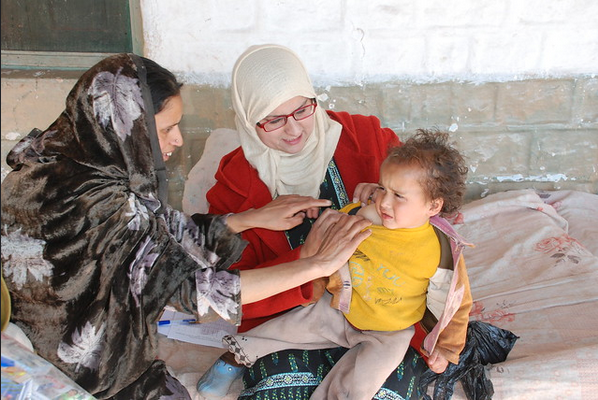
Examples of expressed barriers to accountability included lack of a written human resources (HR) policy, inadequate training, lack of appreciation/feedback from senior management for the frontline workers, and insufficient number of vaccinators. On the latter point, some vaccinators expressed the need for more female vaccinators, who can more easily go inside houses and vaccinate children during outreach activities. The shortage demotivates the vaccinators: "We are overburdened with the vaccination work due to lack of vaccinators and due to polio campaigns."
A key challenge for vaccinators was poor community orientation and mobilisation. One respondent said, "People are not aware of the importance of routine immunization. Doctors are also not cooperative with us, if they refer children to vaccinators in the hospital and educate parents regarding routine immunization it will be good." Another said, "Social mobilization is very much needed. The community is very rigid; chronic refusals are more in number due to lack of education and awareness."
In addition, most participants complained of low salaries and lack of career opportunities provided by the EPI. A key strategy for boosting the motivation and sense of responsibility of frontline workers is a well-defined incentive and appreciation system. Evidence from other developing countries in utilising non-financial incentives shows promise. Community health workers in Ethiopia reportedly have high levels of motivation thanks to use of ongoing mentoring, training, certification, awards (non-financial), and celebrations. Similarly, research in Kenya has found that non-financial incentives play an important role in increasing motivation of health professionals.
Participants identified some solutions to the challenges they articulated, including:
- "There should be more employment of female vaccinators so that they may also go inside the houses."
- "Religious leaders should be more involved to create awareness about vaccination in the community and government should instruct teachers, and they should tell parents about routine immunization."
- "There should be a separate committee for ensuring accountability in the EPI with new measures."
Among other suggestions proposed by the researchers: Both at the federal and district level, the HR policy needs to incorporate a proper and comprehensive training schedule - not only covering vaccination schedules but also addressing matters such as adverse events following immunisation (AEFIs), record keeping, and communication skills.
As noted above, the topic of community mobilisation emerged in several interviews and is an area for future EPI focus in Balochistan. Community mobilisation is the process of bringing together all societal and personal influences to raise awareness of and demand for health care, to assist in the delivery of resources and services, and to cultivate sustainable individual and community involvement. Barriers for community mobilisation that were identified in this study included the lack of community awareness on the importance of vaccinations and the lack of support and coordination between health providers and EPI services.
Further research is needed specifically in context to province of Balochistan, which is characterised by unique cultural and political dynamics compared to other parts of the country, to evaluate the most common barriers to community mobilisation, and the lack of trust between the community and the vaccination programme. In the context of Balochistan, educational sessions, postal or telephonic reminders, and parental incentive schemes may hold promise.
Journal of Global Health 2021;11:06001. doi: 10.7189/jogh.11.06001. Image credit: CDC via Flickr (CC BY 2.0)
- Log in to post comments