










































Building Trust: Learning Brief 1
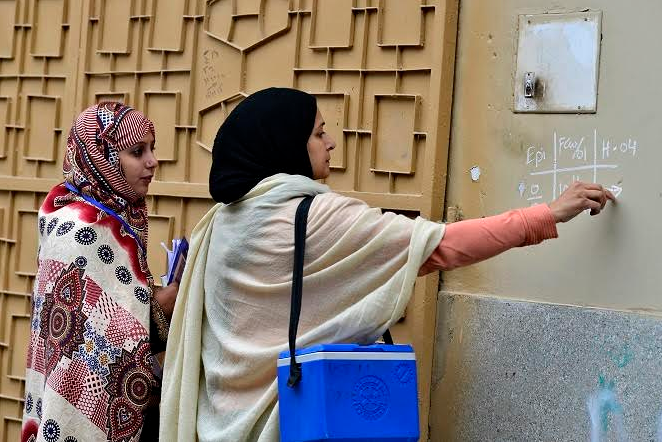
"Recovery from an erosion of trust is neither easy nor quick....most importantly, it involved extensive dialogue with key influencers at all levels led by trusted people..."
These Learning Briefs (see Related Summaries, below) have been developed to capture priority communication challenges facing Pakistan's polio eradication programme. Each looks at a different topic and provides context (why the challenge is important), a description of the bottlenecks and gaps that need to be overcome, lessons from other relevant experiences, and an outline of programme plans to resolve each challenge. This Learning Brief focuses on building trust.
Context
The large majority of Pakistan's population willingly vaccinate their children, participate regularly in supplementary immunisation activities (SIAs), and believe in the effectiveness and safety of the polio vaccine. However, trust varies over time, across the country, and amongst different groups. It can be lost easily and is difficult to rebuild. In some communities, trust is so low that parents make little effort to ensure children are available during campaigns (or even hide them), directly refuse the vaccine, or intimidate frontline workers (FLWs) to falsify vaccination, leading some children to be finger-marked when they have not been vaccinated. Even in communities where vaccination rates are high, gaps in knowledge, changes in risk perception, or frustration with frequent rounds can leave caregivers more susceptible to believing destructive rumours or diminish their enthusiasm for the polio programme. Due to such complexities, gaining and sustaining trust is not a one-off activity.
Recent polls have found that 95% are positive about vaccination and 96% trust polio workers which corresponds to earlier data that found that 98% (outside the Federally Administered Tribal Areas - FATA) and 86% (inside FATA) believed polio drops were good or somewhat good, and 99% (non-FATA) and 95% (FATA) said they had received drops in the previous round. However, trust is not a fixed or permanent state. Continued exposure to rumours and/or community frustration from neighbours or influential people can change people's attitudes. As seen in the fallout from the events of April 22, 2019 the 'slow drip' of frustration and rumour can create environments prone to crises. As far back as 2014 research pointed to this danger with 12% (non-FATA) and 33% (FATA) having heard and believed destructive rumours.
Bottlenecks and Gaps
Local context is everything.
- South Khyber Pakhtunkhwa (KP)'s history of insecurity and legacy of destroyed infrastructure, limited social services, economic disruption, widespread public distrust of outsiders, and few skilled medical personnel and teachers makes it a unique and difficult place to build trust. This history is compounded by high levels of poverty, low levels of literacy, and pent-up demand for healthcare services well beyond polio.
- In other areas, illicit activities or families without proper documentation create further reasons to distrust outsiders. Conservative religious groups cast doubt on the polio programme's agenda or consistency with Islamic law, "posh" neighbourhoods can view FLWs and campaigns as beneath their status, nomadic groups can be suspicious of outsiders, and the underserved can use rejection of polio vaccine as leverage in struggles for other services.
- In many communities, suspicions have led to politicisation, culminating in targeted attacks on staff, bans on campaigns, and multiple and widely accepted rumours that the programme represents an international agenda that seeks to do harm or is not halal.
- Much, though not all, of this suspicion is concentrated in areas where the dominant language and culture is Pashtun.
- Building trust will require ownership of the programme not only on the part of Pashtun and other underserved and marginalised communities but also by posh neighbourhoods and a representative group of allies from across Pakistani society.
Lessons: The Nigeria Boycott
In 2003, the political and religious leaders of Kano, Zamfara, and Kaduna states of northern Nigeria began a boycott of polio vaccination. They argued that the vaccine was contaminated with anti-fertility, HIV, and/or cancerous agents and was part of a western anti-Muslim agenda. The boycott wasn't the result of a single event or pronouncement but, rather, was the culmination of a series of events and the discourse around them, including the terrorist attacks of September 11, 2001, the Iraq war, a recent drug trial scandal, and political distrust between Northern Nigeria and the federal Nigerian government. The resultant loss of trust in the polio programme reached from the highest levels of political, religious, and traditional leadership to the doorsteps of villages across northern Nigeria. Turning the tide on this situation took several years and cost the Global Polio Eradication Initiative (GPEI) an estimated US$500 million.
Key Lessons: Recovery from an erosion of trust is neither easy nor quick. Rebuilding trust required a multi-layered and sustained approach that included advocating with senior political and religious leaders, developing and sustaining relationships to engage traditional leaders, working with polio survivors who could make the value of vaccination understood through personal experience, and responding to community suspicion and concern by changing immunisation practises and building social mobilisation capacity. Perhaps most importantly, it involved extensive dialogue with key influencers at all levels led by trusted people. This was the case for the most senior leadership and the caregiver at the door. The approach involved changes in programme operations, such as adding incentives during campaigns and assuring people the vaccine would be sourced from a Muslim country, and also in programme communication by engaging influential advocates at all levels and developing new media campaigns.

Lessons: India's Influencers
In the mid-2000s, India's polio programme was being held back by misinformation that led elders and local leaders to discourage participation in immunisation programmes. Analysis revealed the concentration of these issues in Muslim communities that also had high rates of un- and under-immunised children. India had already developed a social and behaviour change communication (SBCC) strategy focused on identifying and involving community members who had social, political, and economic influence and were viewed as sources of credible information. However, the lower levels of coverage amongst Muslims were an indication that India’s SBCC influencer strategy was not reaching this large and underserved minority group. This recognition led to the engagement of Muslim communities to better understand the issues they faced and the concerns they held. This new understanding formed the basis for identifying, engaging, and supporting influencers they trusted to respond to those concerns.
Key Lessons:
- Different types of influencers are needed to reach different populations, even within the same community.
- This work needs to be sustained over time, and influencers need to be supported with training, resources, recognition, and regular engagement with the programme.
- There is no substitute for local knowledge in the identification of local influencers, and, where the programme has FLWs, these personnel can be a great resource in identifying and supporting those local advocates.
- Influencers are one part of a trust-building strategy and need to be integrated into other elements such as training, support materials, identification of the "who?" and "why?" of resistance, mobilisation activities, media campaigns, and continued tracking of resistance and its reasons within subsets of communities.
Ways Forward
Trust is not a new concept or area of focus for Pakistan or the GPEI as a whole, but it can be a tricky one to understand, measure, and achieve. It is important to begin with a framework to help define the areas trust-building should focus on and the principles it needs to be built on. If, for instance, we look at UNICEF’s 2013 framework in the appendix, the dimensions and principles outlined can help clarify the focus of trust-building initiatives and the approaches required to develop relationships between the community and polio programme that are strong enough to achieve eradication levels of vaccination. The issues that drive distrust and therefore the responses will be different for different communities, so the approach needs to be flexible, led by well-resourced, supported, and confident FLWs and influencers, developed through dialogue with communities and their leaders, and promoted publicly by a range of influential partners and individuals.
The framework for communication describes a shift from a health belief model that emphasises risk perception to one that focuses on building social norms that reinforce and encourage polio vaccination. Behavioural Insights and nudge theory are to be used within the mass media campaign Vaccinate to Eradicate, and community empowerment approaches are to be used in high-risk local areas implemented in a 5-step process shown in the diagramme above – Inform, Consult, Involve, Collaborate, Empower. This will be done through long-term SBCC interventions that will operate in a sustained way between vaccination campaigns. Differentiated local strategies will focus on approaches tailored to high-risk underserved communities.
Pakistan is presently developing or refining a number of interrelated programme responses that deal with the above issues by:
- Better understanding the communities where polio circulation is most entrenched through research;
- Responding to refusals through a reinvigorated influencer programme that pays more attention to their selection and support;
- Strengthening knowledge of local concerns and issues through participatory challenge mapping and engagement of FLWs;
- Building deeper partnerships with carefully chosen allies across Pakistani society;
- Developing new media initiatives that support and enhance trust in the programme, its workers, and the vaccine;
- Using social media in increasingly sophisticated ways to respond to rumours and support FLWs; and
- Providing FLWs, community members, and local advocates with better support, resources, and training.
Each of these areas is a critical pillar to regaining trust, and each must function in ways that reinforce the work of the others.
Sources
- "The Vaccine Book": Heidi J. Larson and Seth Mnookin. "Trust and Confidence in Vaccines: Tales of Three Vaccines, Lessons for Others", in The Vaccine Book, Second Edition, ed. Barry R. Bloom and Paul-Henri Lambert (Academic Press, 2016), p. 529. DOI: 10.1016/B978-0-12-802174-3.00027-8
- "Recent polls": - Assessment of Mass Media Campaign of Polio Eradication Initiative, August 2020
- "2014 polling data": - Harvard Opinion Research Polling (HORP)
- "The Nigeria Boycott": Ayodele Samuel Jegede (2007), "What Led to the Nigerian Boycott of the Polio Vaccination Campaign?" PLoS Medicine 4(3): e73 https://doi.org/10.1371/journal.pmed.0040073
- "India's Influencers": Dewy R., Mahendra V.S., Morry C., Venth A., Solomon R., Awale J., and Choudhary M.K. (2018). "Influencing Change: Engaging Influencers Building Trust". In Influencing Change: Documentation of Core Group's Engagement in India's Polio Eradication Programme. India: CORE Group.
- "Tricky one to understand, measure, and achieve": Heidi J. Larson, Richard M. Clarke, Caitlin Jarrett, Elisabeth Eckersberger, Zachary Levine, Will S. Schulz, and Pauline Paterson (2018), "Measuring Trust in Vaccination: A Systematic Review," Human Vaccines & Immunotherapeutics, 14:7, 1599-1609, DOI: 10.1080/21645515.2018.1459252
Appendix: Measures and Framework
UNICEF 2013 Framework for Trust Building: Polio Communications Quarterly Update: Trust
Trust needs to be built along three dimensions: in the programme as a whole; in FLWs, and; in the oral polio vaccine (OPV) itself.
Four principles:
- Honesty - The programme's objectives and the methods it uses to achieve them must be transparent and understood by everyone.
- Competence - People must perceive the programme, its workers, and the vaccine as technically sound.
- Morality - Vaccination must be carried out in ways that are seen as principled and in alignment with local standards; the vaccine itself must be seen as halal; and the people who serve as the face of the programme must behave in accordance with local norms.
- Genuine concern for children - The people who promote and offer the vaccine must demonstrate an authentic commitment to the well-being of children, both within the programme and in other contexts.
Image credit: Pakistan Polio Programme
- Log in to post comments