










































Helplines - Connecting People to the Programme: Learning Brief 5
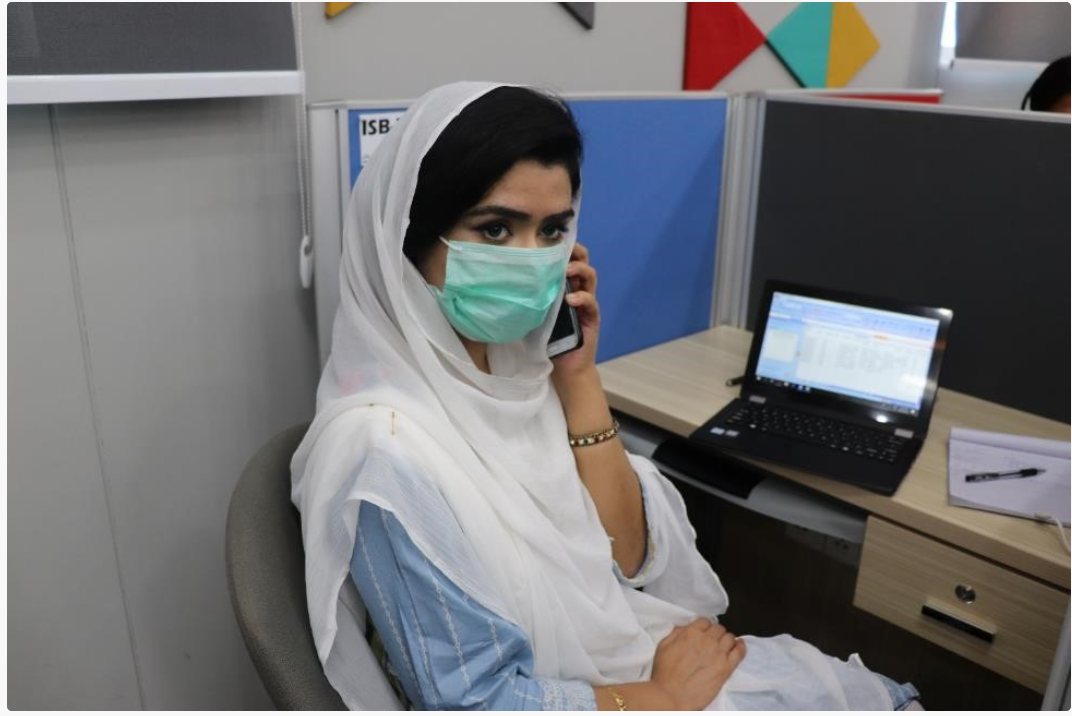
"Tracking the data collected and gathering demographic and social information on users can provide information on community perception."
These Learning Briefs (see Related Summaries, below) have been developed to capture priority communication challenges facing Pakistan's polio eradication programme. Each looks at a different topic and provides context (why the challenge is important), a description of the bottlenecks and gaps that need to be overcome, lessons from other relevant experiences, and an outline of programme plans to resolve each challenge. This Learning Brief focuses on helplines.
Context
Helplines - whether conducted by telephone or a text/voice message exchange - can be an important element of any health programme. They work to disseminate information, create lines of accountability, respond to rumours and misinformation, allow for direct communication with communities, and collect valuable information about perception and concerns. At their best, they reinforce healthy behaviours, help users make informed decisions, and provide information on public opinion.
The polio helpline Sehat Tahaffuz 1166 was established in February 2020 to provide accurate information about polio and other vaccines and a space for the public to report missed children, clarify doubts about vaccines, and lodge complaints when they feel polio services are not optimal. Its main goals are to provide:
- An information and accountability service for the public;
- A monitoring tool for campaign quality;
- A data gathering centre on public perception and circulating misinformation; and
- A communication space that helps build trust and guide caregivers to make positive decisions for vaccination.
It was designed to focus on polio and was fully operational when the COVID-19 pandemic reached Pakistan. Like many other polio resources, it was well positioned to respond to growing and urgent demands for public information on the pandemic. With the onset of the pandemic, it was rapidly expanded to focus on polio, the Expanded Programme on Immunization (EPI), and COVID-19.
Bottlenecks and Gaps
In addition to challenges associated with the need to expand rapidly due to the pandemic, Sehat Tahaffuz 1166 encountered a few early technical and capacity issues such as dropped calls and phone charges that created barriers for some users. These technical issues have been resolved. Going forward, it will be important to sustain the capacity to manage call volumes and to be prepared to respond to changes such as the introduction of new vaccines or the sudden emergence of misinformation.
Another challenge faced by all helplines is sustaining high-quality service, especially at the point of caller/helpline interaction. This factor will have to be monitored constantly, as will outcomes against all its goals. Usage numbers are important, but so are less tangible elements like caller satisfaction, impact on campaign quality, contributions to trust and accountability, and data collection. Sehat Tahaffuz 1166 is tracking call numbers, using random sampling methods to monitor calls, and conducting periodic surveys to gauge caller satisfaction. As it looks to the next year, further development of these monitoring and evaluation (M&E) capacities will be important.
Lessons: The Research
Research on the impact of helplines is limited and often focused on such topics as smoking cessation, cancer information, addiction treatment, and mental health/suicide. On the vaccine side, there is some analysis of human papillomavirus (HPV) helplines and a bit of research on their use to augment surveillance on issues such as adverse events following immunisation (AEFI). Given the limited data available, the lessons below focus on two areas: 1) ideas for measurement of outcomes across outcome areas, including the less tangible ones, and 2) insight into the importance of the interaction between the caller and the call centre, with examples (though focused on breastfeeding) of positive and negative interactions and their impact on outcomes.
Measuring Outcomes for Helplines
It can be difficult to measure outcomes for helplines, as they can be anonymous and often feature brief, one-time contact with those using the service. This guide from Helplines Partnership in London offers simple approaches to measuring helpline outcomes that could be applied to almost any helpline or call centre.
In order to measure the difference a helpline makes in the lives of the people it serves and programmatic understanding of the concerns they have, a number of indicators have been developed in the areas of usage, qualitative research into changes in behaviour, and collection and analysis of the information shared by users during calls.
The figure below [Helplines Partnership (2015)] points to three main areas of evidence. Tracking usage provides insight into how successful promotion of the service is and its perceived value. Conducting qualitative research helps determine how information is being used and whether it has an impact on behaviour. Finally, tracking the data collected and gathering demographic and social information on users can provide information on community perception and also on which communities are using the service – are they the vulnerable groups we want most to reach?

Lessons: Analysis of Helplines in Support of Breastfeeding Self-Efficacy
This research looks at the importance of the interaction between caller and call centre. It finds that women did not always get the support they expected when contacting helplines to seek breastfeeding support. In fact, almost half of the calls analysed were ineffective, 25% showed no change, and 22% actually showed a reduction in callers' confidence to breastfeed.
Specifically, the study analyses three types of calls - supportive, ineffective, and undermining. Focusing on technical and medical advice alone was ineffective, and making moral judgments undermined self‐efficacy. However, mutual respect, information sharing, and acknowledgment of the caller's emotions achieved a co‐constructed solution that led to the desired outcome of building breastfeeding self-efficacy. Figure 2 (at bottom of page 4) shows the qualities of a successful call, which could be applied to a call relating to vaccination.
While some aspects of Sehat Tahaffuz 1166 are focused on programme accountability issues such as complaints about teams and the conduct of campaigns, others are very similar to the breastfeeding example. A caregiver seeking information on polio vaccination and a woman seeking information on breastfeeding are both concerned about the health of their child and are seeking information, guidance, and reassurance that they are making the right decision. Helplines provide proactive support in this regard. The qualities of each call are critical in determining whether an individual interaction is effective. Training call‐takers in interaction techniques and providing feedback on call quality can help build the effectiveness of helpline services.
Key Lessons: A helpline or call centre is at its core a point of contact and communication between a programme or service and the community it serves. The quality of communication during the call (or in the case of WhatsApp, the text or voice message exchange) determines users' experience and impacts on how they perceive the information they receive and consequently their actions after the call. Just as a badly handled call can reduce a mother's confidence in her ability to manage breastfeeding challenges and concerns, so can a badly handled call about a vaccine rumour reduce a caregiver's confidence in vaccines. The importance of training, monitoring, and feedback for staff to listen in a respectful and affirming way and to co-create solutions cannot be underestimated.
Ways Forward
Helplines track community concerns, gaps in knowledge, and rumours, provide useful information, increase programme accountability, add a layer of monitoring during campaigns, and help build trust by creating direct lines of communication between communities and the programme. Importantly, they also provide a space for discussion and co-creation of solutions and action plans related to vaccination and a chance for the programme to interact positively with caregivers on rumours or misinformation. Measuring outcomes, tracking data, providing training, and collecting and incorporating call feedback are central to doing this well.
The communication framework has set forth the following key priorities for the helpline work in 2021:
- Sehat Tahaffuz 1166 will continue to facilitate direct engagement with the public and ensure timely responses to key challenges and questions, 24/7, in Urdu, Pashto, and other local languages used in high-risk communities.
- In addition to answering questions, the helpline will track questions and complaints and direct information about each call to the appropriate district/provincial team.
- Time-sensitive issues (such as a parent noting their child has not been vaccinated during a campaign or a report of a rumour with potential to circulate) will be flagged and addressed promptly.
- A WhatsApp helpline established in 2020 will continue allowing for voice and text messages.
- Consideration is being given to creating tools for public feedback on how to improve the system.
Each of these areas can be further enhanced by providing feedback and ongoing training to call centre staff on the quality of each interaction, ensuring it is non-judgmental, supports the co-creation of plans for vaccination, and offers respectful discussion on misinformation and rumours. As the helplines' M&E capacities are improved, measuring outcomes across areas such as usage, user perception and behaviour, campaign quality, and misinformation will deepen the programme's understanding of the impact of the helpline while improving the services it provides and the information it collects.
2020 saw the helpline take on new roles as it responded to high public demand for accurate information on COVID-19. Prior to the peak of the first wave of the pandemic, the helpline received about 1,000 polio-related calls a day during the February 2020 polio campaign. As the pandemic progressed and the helpline added COVID-19 to its existing focus, calls increased to between 50,000 and 70,000 per day, and the centre's staff and capacities grew rapidly to meet the demand. As of January 2021, the centre receives an average of 11,000 calls per day, with 2020 seeing a cumulative number of nearly 12 million calls relating to polio, the EPI, or COVID-19. During this time, 28,514 missed children were reported and followed up for vaccination.
Looking ahead to 2021, the helpline will continue to provide support for COVID-19, as well as polio and the EPI, for as long as the pandemic continues to respond to evolving questions and concerns as government policy changes, infection rates fluctuate, and new questions emerge with the rollout of a vaccine. For polio purposes, the helpline has demonstrated its ability to identify missed children, provide direct and accurate information to concerned caregivers, and offer a means to interact with the public directly on rumours and misinformation. It will continue to be a useful tool as new vaccines such as the novel oral polio vaccine type 2 (nOPV2) are introduced or if crises emerge, such as the “Peshawar incident” in April 2019. A well-established helpline with the capacity to handle large call volumes and respond flexibly to concerns will be a significant asset going forward.

Sources
- "Measuring Outcomes for Helplines": Helplines Partnership (2015). "Measuring Outcomes for Helplines." https://helplines.org/wp-content/uploads/2015/03/Guidelines_Outcomes.pdf
- "Analysis of Helplines in Support of Breastfeeding Self-Efficacy": Karen Thorpe, Susan Danby, Ceridwen Cromack, and Danielle Gallegos. (2020). "Supporting, Failing to Support and Undermining Breastfeeding Self‐Efficacy: Analysis of Helpline Calls." Maternal and Child Nutrition 16:e12919. https://doi.org/10.1111/mcn.12919
Image credit: Pakistan Polio Programme
- Log in to post comments