










































Pakistan Battles Polio, and Its People's Mistrust
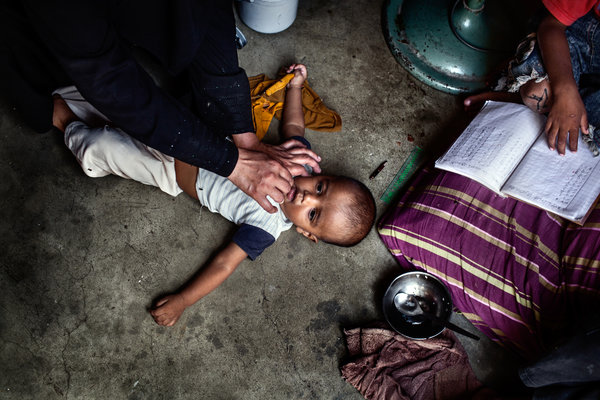
This New York Times article explores communication challenges related to eradicating polio in one of the remaining endemic countries, Pakistan. It begins with the story of Usman, who limps on a leg bowed by the polio he caught as a child. He made sure that his first 3 children were protected from the disease, but he turned away vaccinators when his youngest was born, citing fury over his belief that the United States (US) Central Intelligence Agency (CIA), in its hunt for Osama bin Laden, had staged a fake vaccination campaign. In short, he had come to see the war on polio as a Western plot. In January 2013, his 2-year-old son, Musharaf, became the first child worldwide to be crippled by polio in that year. "Anger like his over American foreign policy has led to a disastrous setback for the global effort against polio." As noted here, there have been killings of vaccinators, and 2 Taliban commanders banned vaccination in their areas, saying the vaccinations could resume only if drone strikes ended.
Two years ago, after the success of India (Pakistan's rival) in eliminating polio and hints from the World Health Organization (WHO) that it might issue travel warnings, Pakistan's government went on an emergency footing. For example, more than 1,000 "mobilisers" were hired to visit schools and mosques to counter rumours that the vaccine contained pork, birth control hormones, or HIV. Volunteers have taken initiative in what is described here as a courageous way. The women of the Bibi family, in Karachi, formed a vaccination team; 2 of them, Madiha, 18, and Fahmida, 46, were gunned down in December 2012. Not only are the remaining female members of the family still vaccinating, but Madiha's 15-year-old sister volunteered for her spot. Also, mullahs were courted to endorse vaccination. They issued 24 fatwas, and glossy booklets of their directives were printed for vaccinators to carry. Prominent imams have posed for pictures as they vaccinate children.
The article focuses on particular challenges in Shaheen Muslim Town No. 1 in Peshawar, "a hotbed of anti-Western militancy". It is a neighbourhood of migrant Pashtun families who receive few government services like health clinics, paved streets, or garbage pickup, but "get shiny new billboards trumpeting the polio fight paid for by Western donors". In the middle of 2012, it became known that in 2011, the CIA. had paid a local doctor to try to get DNA samples from children inside an Abbottabad compound to prove they were related to Bin Laden. "Leaders of the polio eradication effort could not have been more frustrated. They were already fighting new rumors that vaccinators were helping set drone targets because they have practices like marking homes with chalk so that follow-up teams can find them."
The story is told of a Rotary International initiative led by Abdul Waheed Khan, who oversaw a Rotary polio clinic in his school, Naunehal Academy, located in an industrial neighbourhood in Karachi. Having reportedly angered the Taliban by admitting girls to his academy and offering a liberal arts education instead of only Koran study, on May 13 2013, Mr. Khan was killed by gunmen who also wounded his 1-year-old daughter.
Rotary also sponsors a tactic used to reach children from areas too dangerous for home visits: "transit point" vaccinating. At a tollbooth on the highway into Karachi, as soldiers stop each bus to search for guns, Rotary vaccinators hop aboard. About 90% of relevant passengers comply, sometimes after a public argument between a father who believes the rumours and a mother, outside their home and at times backed by other women on the bus, insisting the children be protected.
Other similar strategies for combatting rumours and reaching children in this context of fear and danger are described in the article.
Email from Lora Shimp to The Communication Initiative on July 24 2013. Image credit: Diego Ibarra Sanchez for The New York Times
- Log in to post comments