










































The Untold Story of Community Mobilizers Re-engaging a Disengaged Community During the Endemic Era of India's Polio Eradication Program
CORE Group Polio Project
"...community engagement needs to be on the agenda of any public health program from the start and not viewed as a separate objective. In fact, it is the most valued indicator of success."
Although India's polio eradication programme began in earnest in 1995, gradually, the community disengaged from the programme as misinformation about the oral polio vaccine (OPV) spread. In states like Uttar Pradesh, vaccinators were met with refusals, sometimes accompanied by physical aggression. This brief article explores what caused this break in communication and how the CORE Group Polio Project (CGPP)'s social mobilisers delved deep to uncover why communities had become suspicious of government intentions in offering OPV. In it, Roma Solomon argues: "How the war against polio in India was won needs to be told so that lessons can be used for other community health interventions."
As Solomon explains, what began as a so-called "People's Program" descended into what began to be perceived as a "Government Program", with Indians viewing house markings left by the vaccinator as "sinister symbols identifying certain populations. Was a certain community being targeted with a different vaccine? Did 2 drops of vaccine mean they could only have 2 children?" Part of the issue was that the government's previous family planning efforts came at the cost of other public health and sanitation improvements.
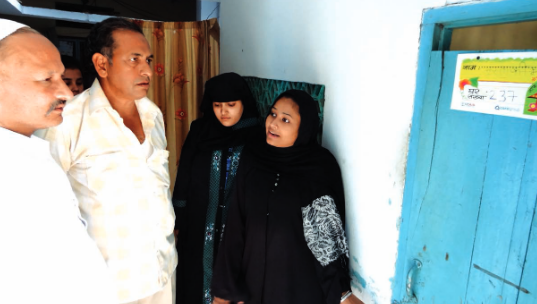
In response to this community disengagement, in 2003, the CGPP (an ongoing United States Agency for International Development (USAID)-funded initiative - for more, see Related Summaries, below) selected local residents to serve as community mobilisation coordinators (CMCs). Their role was to support frontline worker (FLW) vaccinators by mobilising families to accept the polio vaccine. All vaccines were given at both institutional and outreach sessions at predetermined sites so that parents would not need so much motivation to bring their children.
Refusals of the vaccine in Uttar Pradesh were unexpected, since the families had been selected from within the community and thus were known to them. As CGPP discovered, OPV had become the target of people's anger, which stemmed from factors like substandard health service delivery leading to more out-of-pocket expenses. In contrast, in southern states in India, good public health infrastructure had engendered trust between health service providers and communities, and the vaccine "had been provided to them as an entitlement and not as a handout. Polio was eliminated there sooner than in northern states like Uttar Pradesh and Bihar,...where...[a] repeated, coercive, and 'doorstep' vaccine campaign lit the spark that would trigger large-scale refusals."
A key strategy was based on the recognition that "the people needed to be heard, no matter how trivial their grievances may have appeared. It was also vital that communities received correct information about the polio vaccine and not assume that they would accept whatever was being offered."
There were other instances where parents needed reassurance that the vaccine would not harm their child. However, this effort required time and skill, and the CMCs were originally not trained communicators, just young girls who were literate enough to collect and record data. It became clear that for them to succeed, they had to have people's acceptance; therefore, training sessions were held to focus on interpersonal communication skills, coupled with basic technical knowledge about vaccination and polio. "They learned to talk to parents and seniors like mothers in-law and delve deep into their minds to understand where the negative behavior was coming from."
Due to such training, over time, the CMCs were able to prepare the parents for the vaccine, and the FLWs delivered it - while also listening and responding to people's other health complaints. In this way, "the CMCs earned a valid place for themselves in the program and became a vital resource for reaching people....The CMCs let the vaccinators do their job and promised to return to not only check on the child but also discuss other health issues since their training skill set now also included messages on water and sanitation, diarrhea management, antenatal care, breastfeeding, etc. These repeated visits to track children's health and immunization started bringing down the barriers." To support this teamwork-based approach, the FLWs and CMCs shared maps, material, and data with each other.
Other efforts to build bridges between the people and the programme incorporated issues beyond polio and were family wide, and involved: mothers' groups, which were formed to foster discussion of health issues; efforts to access fathers through local barbers, who were trained to initiate conversations about immunisation in general and polio while they cut hair; and the engagement of schoolchildren, who carried messages on the importance of hygiene back to their homes.
Through such multi-layered initiatives, "the polio eradication program began to be accepted and owned by those for whom it was meant." Specifically, "[t]he tide of acceptance of the polio vaccine turned with the realization that the most important people were actually those for whom the program was intended. This significant shift occurred when the people who were trying to change the community's behavior realized that they themselves also had to undergo transformation in their own attitudes."
Ultimately: "This responsive climate became the new normal, building trust between the community and program staff until India was officially declared polio-free on March 27, 2014."
Take-home lessons learned from this experience:
- Programme managers would do well to interact with decision-makers in the community and take their input into account before planning any intervention.
- Programmes should not be imposed onto communities without proper information preceding them.
- Policymakers need to realise that even the most disenfranchised citizens have entitlements.
- People are suspicious of services that are perceived as handouts, especially when there is no rapport with the service providers.
- Good public health infrastructure engenders trust between health service providers and communities.
- Strong communication skills among FLWs are a must.
Global Health: Science and Practice March 2021, 9(Supplement 1):S6-S8; https://doi.org/10.9745/GHSP-D-20-00425. Image credit: CGPP
- Log in to post comments