










































Participatory Design and Community Engagement: Learning Brief 2
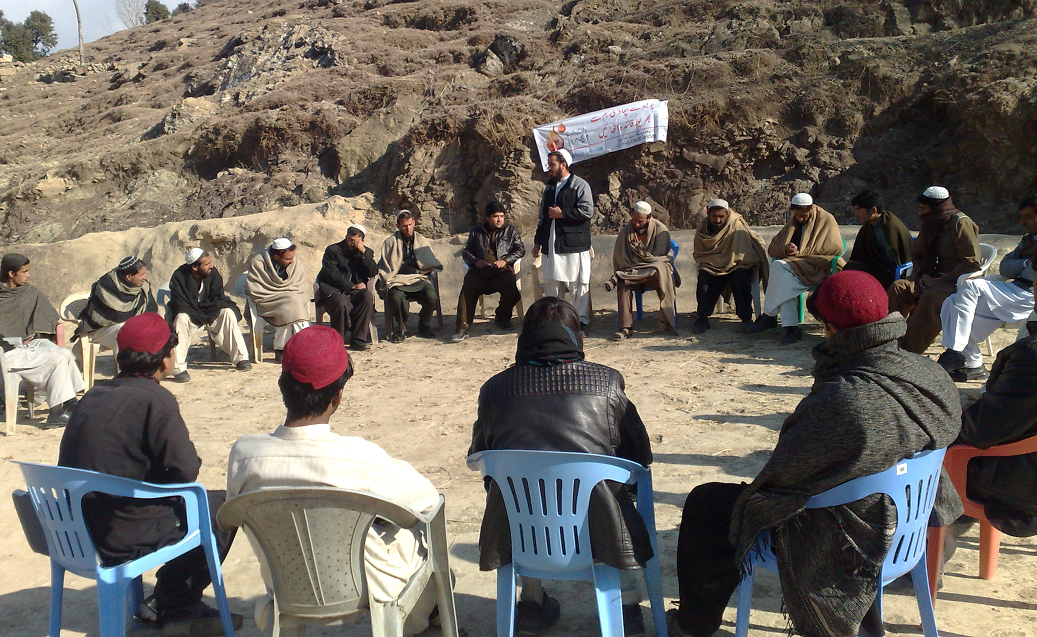
"Convene community dialogues...and neighbourhood meetings...conduct face-to-face interactions...word of mouth...help build social norms."
These Learning Briefs (see Related Summaries, below) have been developed to capture priority communication challenges facing Pakistan's polio eradication programme. Each looks at a different topic and provides context (why the challenge is important), a description of the bottlenecks and gaps that need to be overcome, lessons from other relevant experiences, and an outline of programme plans to resolve each challenge. This Learning Brief focuses on the development of a participatory approach focused on the highest-risk groups.
Context
Pakistan's communication for eradication framework describes the context that has led to the surge in cases in 2019 and 2020. This reversal in progress was not the result of a single event or weakness in the programme. Rather, it was the product of multiple and linked challenges related to politics, management, operations, and communication that combined to create a situation requiring a major transformation of the programme as a whole. Poor management and the pressures of multiple campaigns conspired to pull resources dedicated to community engagement, research, and data gathering into a continuous cycle of preparation for the next round or mop-up. Activities including conducting between-round mobilisation, consulting with communities to better understand their concerns, enabling polio frontline workers (FLWs) to provide other services such as child health education, and responding effectively to growing community frustration and the spread of rumours all fell by the wayside as the pressure of continuous rounds increased. Caught between campaign demands and increasingly frustrated communities, FLWs lost motivation, and the programme lost touch with what was going on in communities across the country. This was particularly true amongst Pashtun populations, where the majority of cases were coming from and the increase in refusals and resistance was most pronounced.
The programme began to respond with the introduction of challenge mapping in 2018 to gather actionable data on issues emerging among local communities. Research capacities were enhanced to better understand community realities and concerns. Social media initiatives were expanded to better understand and respond to rumours. And yet, when the 2019 "Peshawar incident" went viral, leading to campaign stoppages and huge increases in refusals, it became clear just how far community trust had eroded. It would take nothing short of a major transformation to cultivate the kind of local-level knowledge and engagement required to rebuild trust.
This learning brief focuses on one aspect of this transformation - the development of a participatory approach focused on the highest-risk groups, especially the Pashtun, that encompasses research, knowledge gathering, and deeper engagement with the most influential people and structures in those communities. This is not a simple process and will take time, but it has begun.
Bottlenecks and Gaps
There is a history of communication resources being redirected to other programme priorities. Staff hired to do communication work have often become focused on operational tasks. Community engagement has become refusal conversion, and dialogue with the community has shifted too much to a focus on convincing individual parents to vaccinate their children, one door and one round at a time. While this interaction at the door is an essential component of the success of each campaign, it needs to be supported by a communication strategy that creates a social context predisposing caregivers to vaccinate their children. Social norms that encourage vaccination need to be strengthened. This strategy requires a cadre of well-trained communication staff to build networks of trusted local supporters of the programme, engage community and tribal systems in dialogue to understand issues and develop solutions, support access to related services such as essential immunisation, gather and share knowledge on local perceptions, incorporate this knowledge into programme planning, and support ongoing research so the programme is not blind to changing local contexts. The biggest gap has been the focus on risk perception rather than on building trust and sustaining dedicated community engagement resources.
Lessons: Northeast Nigeria
Northeast Nigeria was a major challenge for polio eradication. Facing violent attacks from Boko Haram, low rates of routine immunisation (RI), anti-immunisation rumours, and high rates of non-compliance during campaigns, the polio programme responded with local-level strategies to improve community acceptance of polio, counter misinformation, and increase RI coverage.
Volunteer community mobilisers (VCMs) were deployed in the highest-risk states. They were all women selected by and from their local communities and then trained and supervised by the polio programme. The VCMs were assigned households in their community and were responsible for making frequent visits to speak with caregivers about polio and RI to dispel misconceptions and mobilise them to immunise their children. They established personal relationships with families, thereby building trust in the programme and the information they provided.
Designed for the context of Northeast Nigeria, the VCM model emphasised the need to counter suspicion and address rumours by convening community dialogs and neighbourhood meetings and conducting face-to-face interactions using information, education, and communication (IEC) materials. This approach led to word of mouth dissemination of vaccine-positive information and helped build social norms favourable to immunisation. The VCMs also worked with influencers to reach male caregivers through religious and traditional leaders, included RI in their education and outreach, and supported RI events such as African Vaccination Week.
Key Lessons: By approaching local community engagement through participatory and inclusive activities geared towards building community trust, this initiative reduced noncompliance during polio campaigns, increased RI (including polio), engaged local leaders as advocates, and countered rumours locally through dialogue and word of mouth.
Lessons: East Afghanistan
Community engagement in Afghanistan is the responsibility of the Immunization Communication Network (ICN). Its focus is to sustain and improve polio vaccine acceptance, promote RI amongst Afghanistan's caregivers through mobile and outreach sessions, and build trust. The ICN uses several strategies:
- Mother and child health referral services - Addressing community health needs beyond polio builds trust, especially in deprived communities where standalone polio activities are not well received. Such efforts also helped boost RI: 77% of those who received referrals utilised the services.
- Health facility education - Engagement at the health facility provides an opportunity to engage those who are unreachable at home, including vaccine refusal families and returnees, as well as mobile populations such as nomads and those residing outside ICN districts.
- Use of social events - Identified by ICN staff, events such as wedding ceremonies and social gatherings are an opportunity to vaccinate hard-to-reach children from inaccessible areas and outside the country and to educate the public. In 2019, 58% of missed children were immunised at these events.
- Swift response teams (SRTs) - This approach begins with understanding the reasons why certain children are consistently missed. SRTs consist of influencers from the community, including elders, Mullahs, and doctors, who are trained in interpersonal communication (IPC) skills. Before a team member meets the family, ICN workers find out why they are refusing vaccination. The team then meets to discuss their approach. Based on the reason for refusal, be it medical or religious, etc., the most relevant influencer visits the family, equipped with awareness materials for the discussion.
Key Lessons: The ICN builds trust by fostering local knowledge and connection, providing high-priority services to underserved communities, engaging caregivers in dialogue at health facilities and events, and supporting influencers who are chosen for their appropriateness to each refusal family's context.
Ways Forward
As part of its transformation plans, Pakistan has developed an integrated approach to strengthen communication strategies through the introduction of participatory approaches to community engagement, programme design, planning, and research. Each of these areas of work focuses on improving understanding of high-risk communities and their concerns and suspicions. This approach is in turn linked to rebuilding trust in three fundamental dimensions of the programme: its agenda, its staff, and the vaccine. High-risk communities, especially the Pashtun, are to be more fully engaged in knowledge gathering, problem identification and solving, programme design, refusal conversion, and research. By making communities partners in these processes, the programme will be able to respond to their concerns, and the communities themselves will gain more ownership of it as they participate more in planning and see their concerns reflected in activities and approaches.
The participatory community engagement model has five main components:
- Targeted research and dialogue: The emphasis is on understanding the motivation and aspirations of high-risk communities, with attention paid to Pashtun leadership through continuous updating and deepening of social and behavioural insights. It is facilitated by a medical anthropologist and supported by analysis of community perceptions through challenge mapping and the findings of social and anthropological studies.
- Engagement of Pashtun tribal systems: The tribal systems used by the Pashtun for resolving disputes and social issues have not been as well utilised as they should. Greater effort is now being made to engage local systems in the resolution of social issues through leveraging the Jirga system, especially in South Khyber Pakhtunkhwa (KP) and the Newly Merged Districts. An important component of this work will be forming alliances with the Pashtun leaders as an extended arm of the programme. These leaders will be engaged in ways that ensure they co-create approaches with the programme to investigate issues on the ground, devise interventions, support implementation, and participate in the monitoring and evaluation of results. This work constitutes a long-term vision and investment in "key supporter" capacities to understand the benefits of vaccination and to be able to communicate these benefits to their respective communities with ease and conviction.
- Participatory challenge mapping: Challenge mapping has been used for several years and is now being deployed in super-high-risk union councils (SHRUCs) and HRUCs to better understand and develop responses to emerging local issues. It is being redesigned to be more participatory, involving FLWs in mapping exercises and developing and implementing appropriate local responses.
- Development of, and support for, a wider group of community influencers: Influencers need to be more representative of the communities they come from so as to be able to respond effectively to different issues and groups within their communities. Work is beginning to widen the scope and variety of influencers, together with new and deeper training, materials, and other supports.
- Making refusal conversion committees (RCCs) more representative of the groups where refusals are highest: RCCs with representative influencers (e.g., religious leaders, doctors, schoolteachers, and revenue officers) will serve as mediators, proposing and adapting interventions based on community feedback. The focus will be on tailoring community engagement interventions to community sentiments with input from community influencers.
Sources
- "History of communication resources being redirected to other programme priorities": These issues were raised in the 2019 Communication Review and an extensive review of management structures.
- "Northeast Nigeria": Samuel Usman, Lydia Bologna, and Katherine V. Stamidis (October 2019). "The CORE Group Partners Project in North East Nigeria: Community Engagement Strategies to Combat Skepticism and Build Trust for Vaccine Acceptance", American Journal of Tropical Medicine and Hygiene, 101(Suppl 4), pp. 68-73. https://doi.org/10.4269/ajtmh.19-0143
- "Reduced noncompliance during polio campaigns, increased RI (including polio)": Ibid. Oral polio vaccine given at birth (OPV0) coverage increased from 54.8% in 2014 to 99.0% in 2018, and OPV3 coverage among children aged 12-23 months increased from 47.2% in 2014 to 62.3% in 2017 and 88.4% in 2018.
- "East Afghanistan": Anpuj Panchanan Achari, Shafiqullah Bashari, Zahra Mosaiby, Wazir Khan, and Tamara Abu Sham (July 2020). Lessons Learnt from the Polio Program Communication Activities in Eastern Afghanistan.
Image credit: Pakistan Polio Programme
- Log in to post comments