










































Engaging Adolescents and Children: Learning Brief 6
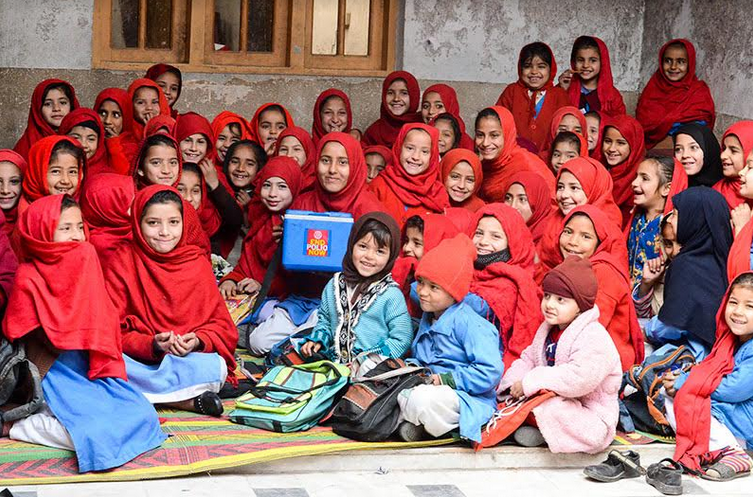
"[S]ystematic engagement of youth groups has a great future in polio interruption as we approach the endgame...promises to be a veritable innovation..."
These Learning Briefs (see Related Summaries, below) have been developed to capture priority communication challenges facing Pakistan's polio eradication programme. Each looks at a different topic and provides context (why the challenge is important), a description of the bottlenecks and gaps that need to be overcome, lessons from other relevant experiences, and an outline of programme plans to resolve each challenge. This Learning Brief focuses on engaging adolescents and children.
Context
In several countries, the polio programme has successfully used the strategy of engaging adolescents and children in high-risk communities. This approach has proven to be a positive way to sensitise teachers and schoolmasters and to introduce curricula covering a range of health practises – from vaccination to personal hygiene. It has been used to engage young people in positive community action, to catalyse the formation of youth groups, and to involve older siblings in polio vaccination campaigns through activities that raise the profile of immunisation days, attract or bring young children to vaccination points, and increase community support for polio vaccination.
Given the growing mistrust in Pakistan's polio programme amongst high-risk and vulnerable communities leading to increases in refusals, not available (NA) children, and harassment of polio frontline workers (FLWs), initiatives that inform and engage adolescents and children in healthy behaviours and encourage them to promote these behaviours in their homes and communities could be a useful tool for changing and sustaining attitudes to vaccination.
Bottlenecks and Gaps
The volume of misinformation in circulation, as well as reports, for example, of children spitting out oral polio vaccine (OPV) because they have been told to fear it, tell us there will be some resistance. Some schools have been at the centre of anti-polio vaccination rumours and misinformation. The different approaches and educational focus of public schools versus madrassas mean the tools and approaches would need to be tailored to each. In addition, youth groups themselves represent new partner groups that would need to be mapped, with relationships built.
Not all parents will support this type of initiative, especially amongst the most vulnerable and highest-risk communities, where there are frequent reports of parents colluding with or intimidating FLWs to finger-mark children without vaccinating them or mark them down as vaccinated when they are not. Equally, there is a history of the polio programme attempting to gain access to schools and madrassas through Imams, but there is also a history of parents, teachers, and schoolmasters refusing access and/or difficulties getting permission slips signed for in school immunisation. Ensuring youth safety in areas where concerned parents sometimes hide children, and where entire communities refuse polio vaccination because the programme has used coercive methods or because they feel they can leverage withholding participation in the programme to get access to other services, will be a significant concern.
However, this is an approach that has been used with considerable success in other endemic countries and has the potential to: mobilise and inform the next generation of parents on the importance of vaccination and other healthy behaviours, create opportunities for more informed family discussions about vaccination, reduce fear amongst younger children based on their older siblings' opinions, and generate more community support, as local adolescents engage in public activities to raise the profiles of immunisation days and attract children to get vaccinated.
Lessons: Nigeria
In Kaduna State, Northern Nigeria, the polio programme was facing serious challenges, with persistent refusal of OPV and harassment of vaccination team members by youth. To address these problems, an intervention was introduced to engage young people from several OPV-refusing communities. The young people were drawn from existing youth groups and worked in collaboration with traditional leaders. Relevant information, education, and communication (IEC) and sensitisation materials were developed, and 1-day workshops were conducted with the youth, using lecture, discussion, and role play.
During the polio campaign, the sensitised youth were deployed to areas of noncompliance and vaccination team harassment. The youth worked with vaccination teams for 7-8 days carrying and distributing "pluses" (such as sugar and milk sachets), helping with crowd control at health camps, and providing entertainment. After each campaign, data were collated and analysed and debriefing sessions were organised with the youth and traditional leaders.
The research concludes that "systematic engagement of youth groups has a great future in polio interruption as we approach the endgame. It promises to be a veritable innovation in reaching chronically missed children in OPV-refusing communities in Nigeria and other polio-endemic countries."
The evaluation found that in one local government area (LGA), the proportion of missed children fell from 7% to 2%, and non-compliant households fell from 4,126 to 778. In another LGA, the proportion of missed children decreased from 5% to 1%. There was a significant decline in missed children, and team harassment decreased from >10 incidents to <5 incidents in the ward. In subsequent rounds, there were no incidents of team harassment.
Lessons: India
India's Pulse Polio Programme engaged older children to extend their reach in the communities, act as "messengers of change", and encourage parents to vaccinate their younger siblings. The goal was to provide a colourful and effective way to increase coverage and educate the next generation, instilling a spirit of community service that was later tapped into to address other child health problems.
The strategy involved partnering with local schools and madrassas to engage teachers and students in the polio effort. Before each polio campaign, polio mobilisation staff conducted a "polio class", where primary and middle-school children learned about polio transmission and its link with sanitation. Over time, these sessions were modified to incorporate more enjoyable activities, using entertainment formats like colouring books and games to prompt discussion of polio, immunisation, and water, sanitation, and hygiene (WASH). These classes came to be known as "Masti ki Kaksha", or fun classes, and were conducted once a month, whether the polio campaign was being held or not. The children were urged to share the information with their families and neighbours and to encourage them to maintain good health and hygiene.
The children also participated in announcing campaigns by marching through the streets to create a celebratory atmosphere and generate interest. They called out to mothers, waved flags, beat drums, sang songs, and shouted slogans about immunisation to summon caregivers and children to the immunisation booths. Children were seen to be effective ambassadors for change, as they were enthusiastic and perceived by the community as non-threatening. Over time, the polio rally was transformed to promote not only immunisation but also good WASH practises.
Qualitative evidence shows that the knowledge children gained from the programme was passed on to the family and had an impact on health-related behaviour; for example, a father of a child participant of the Kukuru-ku rally said, "My children tell me that we must wash our hands with soap after defecation. I happily obey their instructions."
Ways Forward
There are plans for a formative research project with a subsequent intervention component conducted as a pilot study in union council (UC) Landhi-1 in Karachi and led by UNICEF's health section. Its objective is to better understand how adolescents can be engaged to increase the uptake of essential immunisation (EI) in their families and communities and to shift the attitudes and decisions of vaccine-hesitant caregivers. As this work unfolds, the following points are important for the polio programme to consider:
- Engaging adolescents needs to be seen as a long-term investment in the future, offering the next generation of parents a better understanding of healthy behaviours, the importance of vaccination, and the value of giving back to their communities.
- In the short term, this strategy can begin to be introduced through targeted media campaigns including social media, working with willing schools/madrassas to develop acceptable educational resources, identifying teachers or other appropriate influencers to use these resources, mapping and engaging existing youth groups and civil society organisations (CSOs), and identifying appropriate celebrities/ambassadors.
- Both short- and long-term strategies can have a positive impact on polio-related public attitudes through household dialogue, sibling communication, influencer engagement, and visible community action.
- Working with this age group provides an opportunity to open new channels of communication with caregivers, younger siblings, teachers, religious/traditional leaders, and local communities.
- There is potential to raise the profile of campaigns and contextualise discussion of polio vaccination with EI and related health behaviours such as WASH.
- There are precedents in other endemic countries, where engaging adolescents has successfully created stronger relationships with education centres using a less polio-centric approach.
- This strategy has contributed to reductions in missed children and violence against vaccinator teams.
- Materials specifically designed for adolescents and partner groups are essential and need to incorporate fun, clear, accurate information and a sense of community responsibility.
- Bottlenecks to engaging youth in school settings include gaining parent and teacher permission, ensuring the presence of appropriate FLWs, and working within madrasas where polio has been politicised.
- Other avenues to reach adolescents include social media, targeted mass media, non-school-based youth groups, or community spaces where adolescents gather.
- While there are challenges with reaching marginal and high-risk groups through online vehicles, adolescents are more likely to be fluent in social media; this could be a useful tool to provide information on polio and vaccination and to enhance social media literacy.
Sources
- "...access to schools and madrassas through Imams": Shoaib Fahad Hussain, Peter Boyle, Preeti Patel, and Richard Sullivan. (October 2016). "Eradicating Polio in Pakistan: An Analysis of the Challenges and Solutions to this Security and Health Issue". Global Health; 12: 63. https://doi.org/10.1186/s12992-016-0195-3. And: "The United Nations Children's Fund (UNICEF)...has partnered with imams to facilitate immunisation in thousands of schools and madrassas across the country and has launched media campaigns to highlight the risks of polio and the importance of vaccination". Andrew Tomkins, Jean Duff, Atallah Fitzgibbon, Azza Karam, Edward J Mills, Keith Munnings, Sally Smith, Shreelata Rao Seshadri, Avraham Steinberg, Robert Vitillo, and Philemon Yugi. (July 2015). "Controversies in Faith and Health Care". The Lancet. 2015;386(10005):1776-85. https://doi.org/10.1016/S0140-6736(15)60252-5.
- "Nigeria": Audu Musa, Pascal Mkanda, Fadinding Manneh, Charles Korir, Charity Warigon, Emmanuel Gali, Richard Banda, Gregory Umeh, Peter Nsubuga, Ana Chevez, Rui G. Vaz. (November 2015). "Youth Group Engagement in Noncompliant Communities During Supplemental Immunization Activities in Kaduna, Nigeria, in 2014". The Journal of Infectious Diseases. Vol. 213, suppl 3: S91-S95.
- "India": Rina D., Mahendra V.S., Morry C., Venth A., Solomon R., Awale J., and Choudhary M.K. (2018). "Messengers of Change: Involving Children in Polio Awareness". In Influencing Change: Documentation of CORE Group's Engagement in India's Polio Eradication Programme. India: CORE Group.
- "...develop acceptable educational resources": As the study "Scaling up of Life Skills Based Education in Pakistan: A Case Study" reveals, developing curricula that is acceptable and achieves its goals in contexts where society is conservative and possibly suspicious may not be a short-term or simple process. Nevertheless, and in spite of uneven success in the most conservative areas, the study did demonstrate that introducing a controversial topic at scale is possible. (Joar Svanemyr, Qadeer Baig, and Venkatraman Chandra-Mouli. (March 2015). Sex Education, 15:3, 249-62, DOI:10.1080/14681811.2014.1000454.)
Image credit: Pakistan Polio Programme
- Log in to post comments